




Ranking on top of the SERPs is everyone’s dream nowadays. Attracting new consumers becomes considerably more straightforward when your site ranks at the top of search engine results. A strong SEO strategy is what makes this ranking possible. But what constitutes a strong SEO strategy? On-page and off-page SEO! Search engine optimization (SEO) consists of two main components: on-page and off-page. On-page SEO targets specific elements of a website, while off-page SEO aims to improve the site’s overall exposure along with all the off-page factors. So, how do we differentiate between these two? And what makes them so important?
Read the blog post below to learn extensively about on-page and off-page SEO, their key differences, and the strategies included.
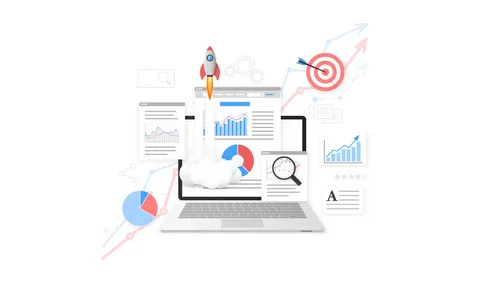
On-Page vs. Off-Page SEO- Your Guide to the Fundamentals of SEO
Search engine optimization (SEO) has two main components that decide its success: on-page and off-page. When it comes to SEO, “on-page” means focusing on the parts of your website that are in your control while promoting your website or business in various online spaces, is the goal of off-page SEO.
In a nutshell, on-page SEO is all about making your website user and search-engine-friendly. In contrast, off-page SEO is about getting your website seen while establishing your content as an authority in its field. Let’s take a deeper look at the factors involved in both.
On-Page SEO Factors:
Here are a few factors that impact on-page SEO;
Page speed:
Page speed, often called load time, is a crucial component of on-page SEO. Google gives preference to faster pages in search results, and improving page performance can increase a page’s chances of being indexed by Google. For the best user experience, Google prioritizes assisting consumers in finding what they need as fast as possible. So, if you want your site to rank higher in search results, make sure your pages load faster on both desktop and mobile.
Mobile-friendliness:
A website’s mobile friendliness is its performance when accessed and used from a mobile device. Page elements on mobile-friendly sites can automatically resize to accommodate any screen size while preserving the usability of the site’s navigation for users. With a responsive design, easy navigation, and quick page speeds, your mobile user experience can be easily enhanced.
Content quality:
You must ensure that the content on your web pages benefits readers. The users should be able to locate what they are seeking. They should also find it easy to read and valuable. Although there is no hard and fast rule about the optimal number of words for a page, Google seems to favor pages with abundant useful content connected to your subject and keywords.
Meta-title and meta description:
Another part of on-page SEO is the page title. Google uses meta-titles to understand your page’s content and better match it to a specific search query. Search engines also use page names to help them grasp a page’s content.
Meta descriptions, however, do not play a role in search engine ranking but show up in SERPs and significantly affect the click-through rate. Both these parts should be written with the searcher in mind while catering to the relevant keyword.
URL structure:
Although URLs don’t matter much in rankings, you should still optimize them according to Google’s SEO standards. When optimizing your URLs, keep the user in mind. The URL is visible in both the address bar and the search engine results pages (SERPs). Additionally, visitors can click on a URL that is more specific than the other and know exactly where they are on the website.
Internal linking:
Any link to a different page within the same website is called an internal link. Google uses internal links for many purposes, including discovering your website’s new pages, boosting other web pages you own, and understanding a page’s content. Visitors can quickly explore different aspects and find the necessary information if your website has internal links. Ideally, you should incorporate internal links into your content creation process to help your page rank better.
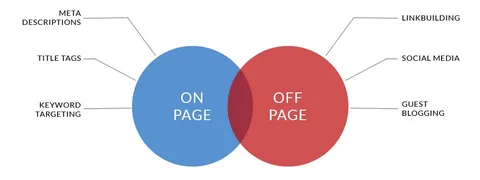
Off-Page SEO Factors:
Here are a few factors that impact off-page SEO;
Backlinks:
For off-page SEO, a large number of high-quality backlinks are highly crucial. Due to the significance of backlinks, Google has implemented numerous algorithm modifications to combat link spam and scheme schemes. Backlinks made with credible websites help your website appear more authoritative for search engines.
GMB profile:
With Google My Business (GMB), companies can simply and quickly provide online access to crucial information about their business. This data includes your location, service area, contact details, and operating hours. Google Maps uses GMB to generate local search engine results. Because of this, it is an essential off-page SEO component for any local company that depends on customers in a specific area.
Reviews:
Customer reviews greatly influence your map pack results. Just as in real life, your ranking will go up when people give you good evaluations and down when they give you bad reviews on your GMB profile. Keep in mind that search engine results pages (SERPs) prominently display rankings and ratings, undoubtedly affecting users.
Which One is More Important?
Honestly, choosing between on-page and off-page SEO is like deciding between a house’s foundation and roof—you can’t survive without both. Both on-page and off-page SEO strategies complement one another in pursuing higher search engine rankings. However, if we dive deep into the intricacies of search engine optimization, experts typically recommend taking care of your on-page SEO first.
Like a house, the foundation should be laid before any other structural elements. Like the foundation, maintenance of your on-page SEO may be necessary at regular intervals. However, finding a happy medium between the two will help you maximize your SEO results and boost your ranks.
Need More Insights on SEO? Keep Following Purpose Path
Remember that on-page and off-page SEO are complementary to any effective SEO plan. You can’t get anywhere without both the tires and the engine, so you don’t have the option to choose one. To get the most out of SEO strategy, it’s essential to have solid on-page SEO and a robust off-page SEO working simultaneously. If you ever feel SEO is a challenging task, you can always ask a professional to help you out with more insights and in-depth analysis.
At Purpose Path, Canada’s most reliable digital marketing agency, we not only offer the best insights to help you make the most of your digital campaigns but also offer all digital marketing services under a single roof to make your business progress in the right direction. Whether on-page or off-page SEO, technical, international, or location-based, our team of experts leverages their years of experience to make your SEO game more potent than ever. Curious how this works? Reach out to us now.
Frequently Asked Questions:
- What are some of the pros of on-page and off-page SEO?
On-page SEO enhances your website’s structure and content to make it more discoverable and indexable by search engines. On the contrary, off-page SEO improves a critical component in search engine results known as site authority.
- Why is on-page SEO considered so important?
On-page SEO improves a website’s visibility in search engine results (SERPs). It is vital to SEO because it can increase a page’s organic traffic and rankings on SERPs. Meta titles, internal links, and URLs are common on-page SEO factors.
- Why is off-page SEO so critical?
Off-page SEO is critical because it leads to better organic search rankings, improved brand recognition, and more targeted organic search traffic. You will likely only achieve your desired results from search engine optimization (SEO) once you incorporate off-page SEO strategies into your overall plan.


