



Pick any website and run an audit on it. Chances are, you will see a drop in traffic. Rankings that held steady for months are slipping. Blogs that used to pull consistent clicks now sit in the dark. Why?
The AI shift. It started a few years ago, but in 2026, its impact is impossible to ignore. The way people search for information, find it, and make buying decisions has changed quickly. And most businesses have not caught up.
So what should you do? How do you protect your website, your blog, or your online store from this shift? In this guide, we will break it all down and show you what content marketing actually looks like when it works in 2026.
Why Content Marketing Still Matters in 2026
Here is something most people already do without thinking about it. When they search online, they skip sponsored results. They scroll past the ads. They click on the organic links.
That is not a coincidence. Most searches are not buying decisions. They are research moments. Someone wants to understand something, compare options, or determine whether they even have a problem worth solving. For example, if you are trying to understand how SEO works in Ontario, you search for it. You are not immediately ready to hire an agency. You want to learn first. That is exactly how most of your potential customers behave, too.
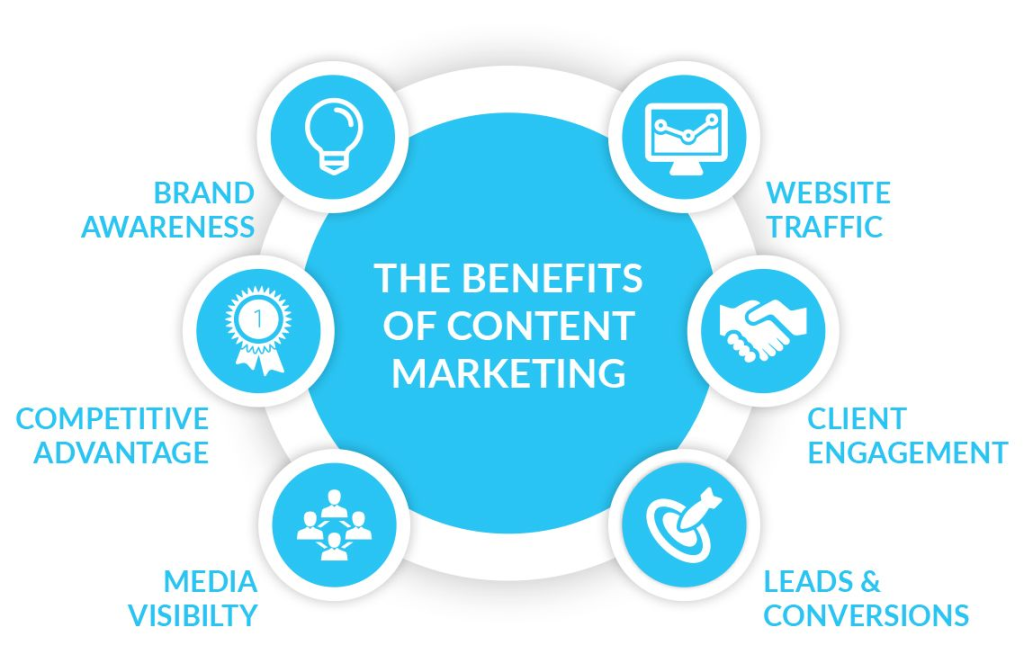
This is one reason content marketing still carries real weight. Organic search results account for 94% of all clicks. That number tells you something. People trust organic content. They go looking for answers, and the businesses that publish those answers build trust before a sales conversation ever happens.
From a business perspective, paid advertising has its place. But it stops the moment your budget runs out. Content marketing costs 62% less than traditional marketing while generating three times more leads. That cost advantage grows over time because quality content continues to work long after you publish it.
From the consumer side, the process has always been the same. People research, compare, read reviews, check alternatives, and then buy the best option for their situation. Your content is what shapes that decision before they ever speak to you.
At Purpose Path, we do not claim to be the best at everything. But we do believe in a no-bullshit approach to marketing, which means building content that genuinely helps your audience, not just filling a page. That distinction matters more in 2026 than it ever has.
The Biggest Shifts Reshaping Content Marketing Right Now
AI is the biggest disruptor in content marketing right now. Its impact is wide, and it is likely one of the reasons your site is experiencing a slow, steady decline. Here is what is actually happening.
Zero-Click Search and AI Overviews
AI Overviews are everywhere now. Even people who do not follow digital marketing closely have noticed them. They show up at the top of search results, pull together information from multiple sources, and answer the question right there on the page.
The result is that users get what they need without ever clicking through to your website. 60% of searches now end without a click, driven by AI overviews and answer engine results. About 30% of marketers report a decrease in traffic since AI tools became mainstream.
This is the zero-click problem, and it is not going away. Zero-visit visibility is becoming a significant portion of content marketing focus in 2026. Your content might be informing the AI’s answer without sending a single visitor to your site.
What this means for your business is that rankings alone are no longer the goal. You need your brand to be cited, referenced, and recognized as an authority so that even when a user does not click, your name is the one they remember.
AI-Generated Content Saturation
AI is not the enemy. It is a tool. But poor use of that tool is quietly destroying websites across every industry.
Here is what the bad version looks like. A content writer types a simple prompt: “Write a 1,000-word blog on digital marketing in 2026.” The AI delivers it in seconds. The writer publishes it. They will do it again tomorrow. And the day after that.
The problem is that the output is nearly identical to that of a hundred other websites. Non-AI blog creation has dropped from 65% to just 5% of marketers in two years. The internet is flooded with similar-sounding, thinly differentiated content, and Google knows it.
We have seen this pattern play out with a client who was publishing 5 or more blog posts per day using ChatGPT. At first, the results looked promising. Impressions climbed, a few keywords hit the first page, and the traffic numbers moved. Then came the drop. A significant one. Recovering from it has taken months of careful work, and the improvements, while real, have been gradual.
Human-edited content performs better than fully AI-generated content. That gap exists because AI cannot replicate lived experience, original insight, or a genuine point of view. According to research by Neil Pael, human-generated content received 5.44 times more traffic than AI-generated content. Those are the things that make content worth reading.
You can absolutely use AI in your workflow. Use it for outlines, meta descriptions, FAQs, and first drafts. But your voice, your expertise, and your judgment need to be the final layer on everything you publish.
The Rise of Micro-Communities Over Mass Reach
Organic reach on branded social pages continues to decline. The days of posting on your business Facebook page and reaching a large slice of your audience for free are mostly gone. Algorithms now reward content that drives immediate engagement, and generic branded posts rarely do that.
What is growing instead is the influence of smaller, more tightly knit communities. Micro-communities are two to three times more influential than traditional ads. These are the Facebook groups, subreddits, LinkedIn communities, and niche forums where your potential customers actually talk to each other.
Brands that win in these spaces do not show up to sell. They show up with genuine value, answer real questions, and build a reputation over time. Nearly 40% of consumers trust micro-community recommendations as much as personal ones. That is powerful peer-to-peer credibility that no ad budget can replicate.
Video and Multi-Media Content
Text alone is no longer enough to stand out. 90% of marketers report a positive ROI from video content, with 95% agreeing that video is a critical component of marketing strategy.
Short-form video consistently delivers the highest returns across all content formats. 22% of marketers said expanding from text-based to visual and audio content was the most effective diversification strategy for their brand. Explainer videos, behind-the-scenes clips, client stories, and quick tips all help you connect with an audience increasingly preferring to watch rather than read.
If your business has avoided video because it feels complicated or too far outside your comfort zone, 2026 is the year to rethink that position.
What a Winning Content Marketing Strategy Looks Like in 2026
Knowing what has changed is only half the picture. Here is what to actually do about it.
Start With Brand Identity, Not Tactics
Before you write a single word or shoot a single video, you need clarity on who you are and what you stand for. In an era of nonstop content, a strong brand is more important than ever before.
Your brand voice, your values, and your unique perspective are the things AI cannot reproduce. They are your competitive advantage. When you have that clarity, you can experiment with different formats and platforms without losing the thread of what makes your business worth paying attention to.
Build for AI Visibility, Not Just Google Rankings
Your content needs to be findable by AI tools, not just traditional search engines. This means writing clearly structured content, using headers and subheadings that signal topic relevance, citing credible sources, and covering topics with sufficient depth to serve as a reference point.
Brands that accelerate their AI visibility strategy in 2026 will be better placed to drive growth. Getting your content cited in AI Overviews, ChatGPT responses, and Perplexity answers is the new version of ranking on page one.
Diversify Your Distribution Channels
If the majority of your traffic comes from Google organic search, you are carrying more risk than you should be. Email and social are gaining ground as search traffic becomes less predictable, pushing brands to diversify how they reach audiences.
Build your email list. Grow your presence in communities where your customers spend time. Invest in platforms where you own the relationship, not just the ranking.
Measure What Actually Matters
Traffic is no longer a reliable indicator of content performance. You need metrics tied to business outcomes. Track leads generated, email sign-ups, consultation requests, conversions, and revenue attribution.
Nearly 56% of marketers say it is much easier to improve conversion rates now than it was ten years ago. The tools exist. The question is whether you are using them to measure the right things.
Frequently Asked Questions
What is content marketing, and why does it matter in 2026?
Content marketing is the practice of creating and sharing useful, relevant content to attract and build relationships with your target audience. In 2026, it matters more than ever because buyers research before they buy, organic content builds lasting trust, and quality content keeps delivering results long after you publish it.
How has AI changed content marketing?
AI has changed content marketing in two significant ways. It has made it easier to produce large volumes of content quickly, leading to widespread saturation and a decline in average content quality. It has also changed how people find information, with AI tools now answering questions directly and reducing the number of clicks to websites. The response is to use AI as a tool while prioritizing original insight, brand voice, and human judgment.
What is zero-click search, and how does it affect my business?
Zero-click search happens when a user gets their answer directly from a search results page or an AI Overview without visiting any website. This reduces organic traffic even when your content ranks well. Businesses need to shift their focus from traffic alone to building brand authority and AI visibility so their name gets recognized even in zero-click moments.
What types of content work best for small businesses in 2026?
Short-form video consistently delivers the highest ROI right now. Long-form blog posts of 1,500 words or more tend to rank better and earn more backlinks. Email newsletters offer strong conversion rates. And community-driven content, such as user-generated posts or active participation in niche forums, builds trust at a level that paid ads cannot match.
How do I measure the ROI of content marketing?
Track metrics tied to business outcomes rather than vanity metrics. The most useful indicators include leads generated, email subscribers gained, consultation requests, conversion rates, and revenue attributed to content-driven traffic. It typically takes three to six months for content marketing to show meaningful results, but the returns compound over time in ways paid advertising cannot match.


