

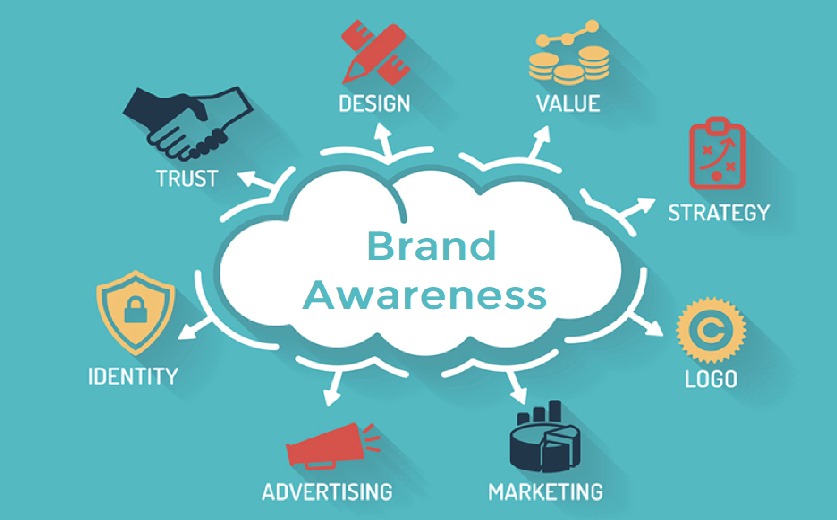


SEO helps you appear prominently in search results. It helps increase awareness of your business, which is why it’s called SEO for brand awareness. Building awareness is highly beneficial for your business’s long-term growth and success.
To fully understand why, it’s important to explore the two-way relationship between brand awareness and SEO. This guide explains that relationship and gives you a clear, actionable plan to build your brand using SEO.
How SEO and Brand Awareness Work Together
The relationship between brand awareness and SEO is a cycle. Each one directly impacts and strengthens the other.
How SEO Impacts Brand Awareness
SEO boosts brand awareness by improving your website’s visibility in search engine results. When people see your brand, they are more likely to remember it. Even if they don’t click on your website right away, seeing your name repeatedly builds familiarity.
A great way to do this is to improve your rankings for non-branded, long-tail keywords. These are highly specific phrases that do not mention your brand name. They tend to have lower search volumes and keyword difficulty scores.
For example, ranking for a term like “organic lavender candles” is much easier than trying to rank for a broad term like “candles.” When you appear in search results for these specific terms, you are putting your brand on the radar of people who are actively looking for a product or service you offer.
When people see your content multiple times, that leads to greater brand awareness. Over time, this can boost traffic and sales as your brand becomes more trusted.
How Brand Awareness Impacts SEO
As users become more familiar with your brand, they are more likely to click on your search results. They will also search for your brand name directly, known as branded search. An increase in branded searches signals to search engines that your brand is becoming more popular and relevant. This can further improve your overall rankings and organic traffic.
Growing brand awareness also benefits you when other companies start to recognize your business. For example, a well-known blog in your industry might mention your brand in a review or a list article and include a backlink to your website.
Backlinks are an important ranking factor. Acquiring them can make your entire website more authoritative and boost your SEO results.
A Practical Guide to Using SEO for Brand Awareness
Here are some of the most effective ways to use SEO to grow brand awareness. These strategies are a vital part of a comprehensive marketing plan.
1. Create Keyword Clusters
Identifying keyword clusters (groups of closely related search terms) can help you build topical authority and boost your rankings more effectively. Instead of creating a separate page for each individual keyword, you can target all the terms in the cluster with one comprehensive page.
For example, a keyword cluster might include phrases like “how to make candles at home,” “DIY scented candle,” and “easy candle making kit.” All of these terms are related to the same topic. By creating one detailed guide that covers all of these concepts, you signal to search engines that your content is a complete resource on that topic.
This process improves your chances of ranking for all of those keywords. It also helps you create a more valuable piece of content for your readers.
You can use a keyword research tool to find these clusters. Start with a broad term, like “candles,” and filter the results by keyword difficulty.
2. Determine What Kind of Content to Publish
Once you know which terms you will target, you need to decide what kind of content to create. Creating the right type of content gives you the best possible chance of achieving a high ranking. The top-ranking pages for a keyword cluster can give you important clues about user intent.
To figure out what works, analyze the top-ranking pages in your niche. Your goal is to understand what makes that content great. Look for patterns related to:
- Page types: Is the top result a product page, a how-to guide, a listicle, or a blog post?
- Headings and subheadings: How are they structured? What keywords are they using?
- Text length: Are the top-ranking pages short, long, or somewhere in between?
- Visuals: Do they include images, videos, or infographics?
By understanding these patterns, you can create a piece of content that is even better. For example, if you see that most top-ranking pages for a keyword cluster are comprehensive guides, you may create a more detailed guide with a video tutorial.
3. Create High-Quality Content
Now, it is time to create new pages that contain engaging, optimized content. Your content should be more than just text. It must have a strong relationship with your brand. The content should align with your brand’s voice and style.
Your content should provide value and be trustworthy. An SEO writing assistant tool can help you with this. These tools offer suggestions for readability, SEO, and originality as you write.
Your content should also have a strong flavour of your brand’s personality.
4. Build High-Quality Backlinks
For search engines, backlinks act like votes of confidence. The more high-quality backlinks you have, the better for your overall brand awareness and SEO performance. A good backlink strategy focuses on getting links from high-authority, relevant websites.
To find backlink opportunities, it’s helpful to understand who is linking to your competitors. You can use a backlink analysis tool to identify which domains link to your competitor’s pages but not to yours.
Once you have this list, you can reach out to those sites to ask for a link in a similar way. Other effective link-building tactics include guest blogging on reputable sites and finding broken links to replace.
5. Provide a Good User Experience
Ranking for your keyword clusters and gaining backlinks will drive visibility, but you also need to provide a great user experience to convince visitors to stay. A good user experience also helps maintain good SEO performance.
Two of the best ways to provide a good user experience are:
- Maintain Strong Core Web Vitals Scores: Core Web Vitals are a set of metrics that measure a website’s user-friendliness and overall performance. This includes how fast a page loads and how stable it is as it loads. You can use a website audit tool to check your site’s scores. If you have a poor score, the tool can give you suggestions on how to improve it.
- Provide a Secure Connection: Your website must use a secure connection (HTTPS). A secure connection assures website visitors that their information is protected. HTTPS is also a confirmed ranking factor. Search engines will prioritize results from websites that use a secure connection over those that do not. You can use a site audit tool to check for any security issues on your website.
Measuring SEO’s Impact on Brand Awareness
There are several ways to measure how well-known your brand is becoming through SEO.
- Branded Search Volume: This is the amount of traffic you get from searches that include your brand name. You can use an organic research tool to find this value. As you work to increase your brand awareness, this number should grow.
- Brand Mentions: Monitor mentions of your brand across social media, articles, and online forums. Brand mentions show that your brand is part of online conversations and is in the public consciousness. You can use a brand monitoring tool to track this.
Final Thoughts
SEO is a fundamental part of a successful brand awareness strategy. It ensures your company is visible when people search for solutions in your industry.
A consistent SEO strategy builds trust, recognition, and authority over time. SEO-driven visibility helps your brand stay top of mind for potential customers.
The most effective SEO strategy for branding involves:
- Thorough research and a clear understanding of your audience.
- Crafting great content that aligns with your brand.
- Using keywords intelligently to attract the right people.
- Building high-quality backlinks.
- Ensuring your website provides a great user experience.
These efforts will raise your brand awareness and lead to increased sales and engagement.
FAQs
How does SEO help build brand awareness?
SEO increases your brand’s visibility in search results. The more often users see your brand in search results, the more familiar they become with it, which builds recognition.
Can SEO increase trust in a brand?
Ranking high in search results signals authority. When users repeatedly see your content and brand in top positions, they develop trust in your brand as a reliable source of information.
What is the difference between branded and non-branded search?
Branded search refers to searches that include your brand name. Non-branded search refers to searches for general terms related to your industry. Both are important for building brand awareness.
Does local SEO improve brand awareness?
Local SEO ensures your business appears in local search results and on maps. This method helps people in your area recognize your brand and builds a strong reputation within your community.
How long does it take for SEO to improve brand awareness?
SEO is a long-term strategy. Most businesses see noticeable improvements in brand awareness within 4 to 6 months. The timeline depends on the competitiveness of your industry and the consistency of your efforts.


